
Pioneering efficient recycling of plastics using terahertz technology
Abstract
In recent years, global plastic consumption has reached unprecedented levels, leading to a significant increase in plastic waste and the associated environmental challenges.
Among the obstacles to recycling, sorting black plastics poses a unique challenge. While most plastics, whether colored or not, can be sorted more easily using near-infrared technologies, black plastics are more difficult to distinguish, primarily due to the carbon black used in their pigmentation. This pigment strongly absorbs light, resulting in low reflectance and a flat spectrum, making it impossible to identify the polymer.
In this context, terahertz spectroscopy emerges as a promising approach to improving the characterization—and thus the sorting—of black plastics. Thanks to the properties of terahertz light, it becomes possible to obtain spectral information about the material despite the presence of black pigments. This enables more accurate identification and characterization that accounts for pigmentation, which is essential for simple and cost-effective integration into industrial processes.
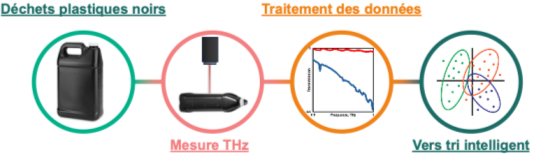
Figure 1. From Concept to Results: An Overview of Our Experimental Approach
The results obtained for high-density polyethylene (HDPE) show that the terahertz response varies as a function of the carbon black concentration in the material, as shown in Figure 2(a), where a decrease in transmission was observed as the pigment concentration increased. Furthermore, Figure 2(b) shows that at 0.803 THz, the extracted transmission values vary linearly with carbon black concentration.
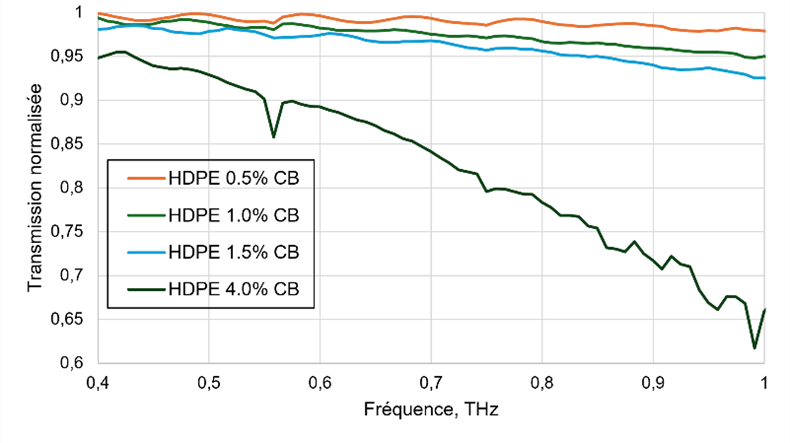
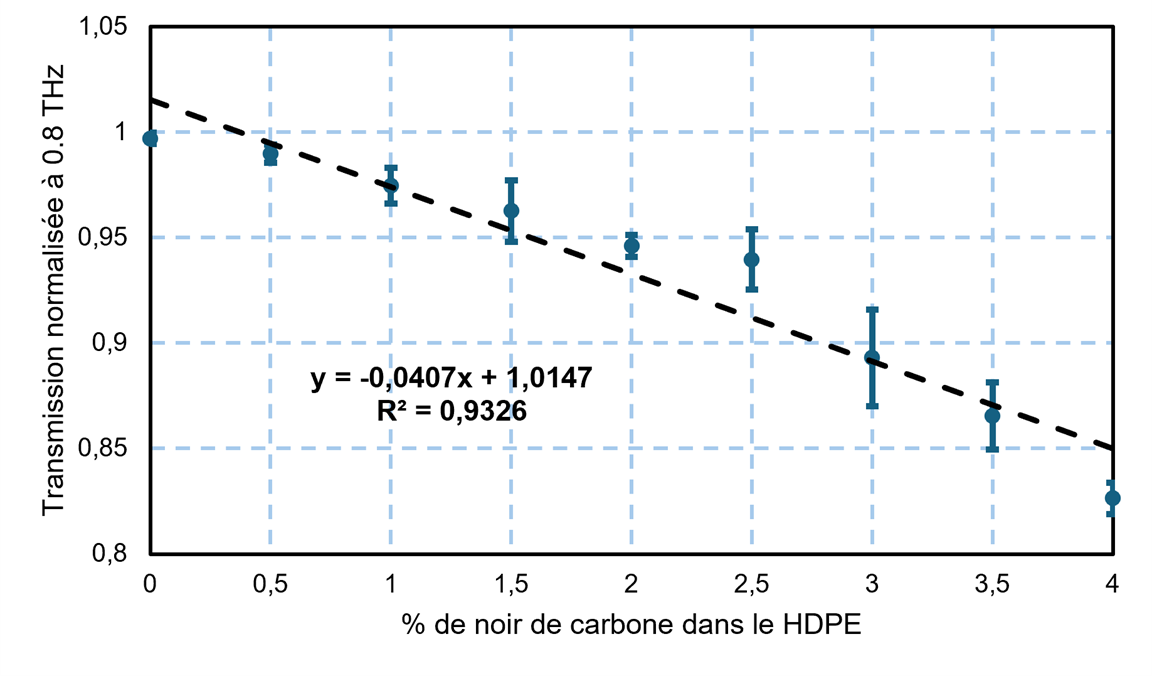
Figure 2 (a) THz-TDS measurements of HDPE at different carbon black concentrations. (b) Estimation of carbon black content using a single-parameter linear trend.
These results demonstrate the possibility of estimating carbon black content using a single-frequency measurement, facilitating the integration of this technology into industrial sorting processes. Ultimately, this approach could improve the recovery of black plastics, reduce the amount of material sent to landfills, and increase the value of recycled materials.